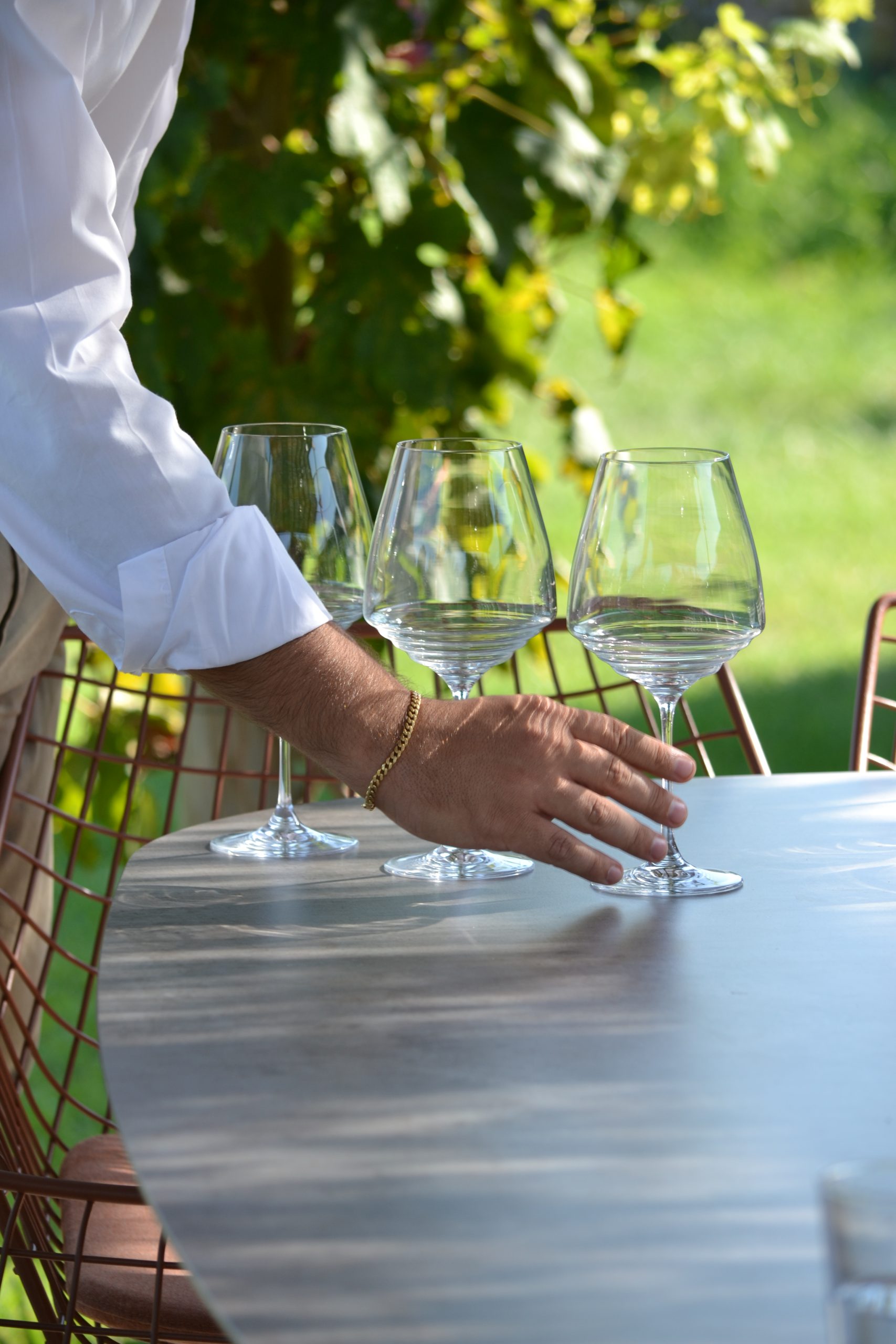
To tylko sztuczka? Rzym z architektami w stylu „Wielkiego piękna”
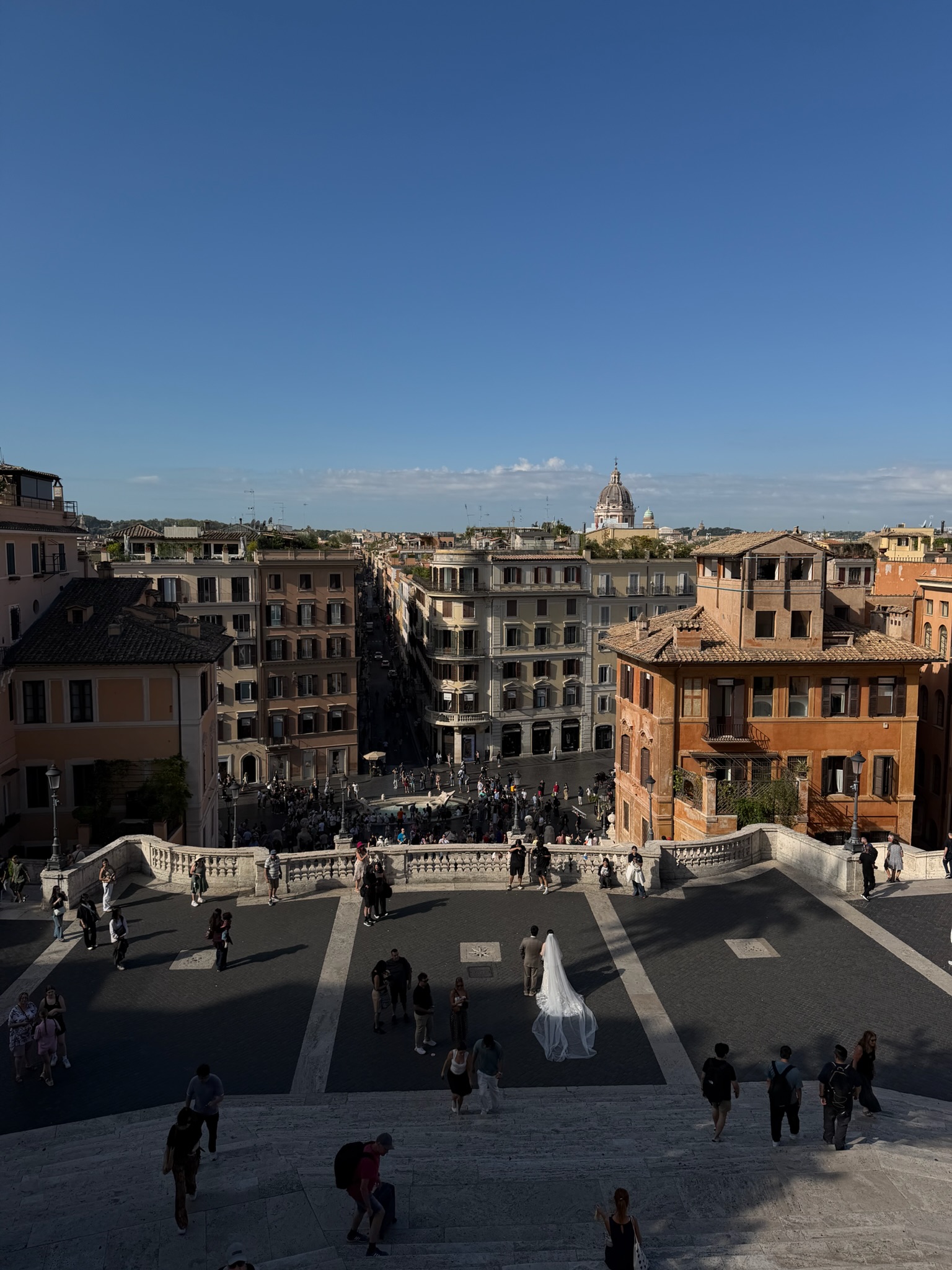
Reportaż z wyjazdu ArchiTour, wrzesień 2026, zaprojektowany i zrealizowany przez Slow Italia.
Jep Gambardella, bohater „Wielkiego piękna” w reż. Paola Sorrentina, budzi się po swoich 65. urodzinach z jedną pewnością: nie może już tracić czasu na rzeczy, na które nie ma ochoty. Cóż, rozumiemy go lepiej, niż wypada przyznać… Wyjazdy składane z gotowych klocków i schematów, z tymi samymi punktami w tej samej kolejności, nas nie interesują. Interesują nas podróże, w których każdy dzień ma swoją dramaturgię, rytm, a grupa architektów i projektantów wraca do domu z czymś więcej niż zdjęciami. Wrześniowy ArchiTour do Rzymu dla grupy architektów zrealizowany dla firmy ,,Piękne Kuchnie” napisaliśmy tak, jak Sorrentino pisze swoje filmy: obrazem, dźwiękiem i słowem.
Rzym to trudne miasto i nie będziemy udawać, że jest inaczej. Jest chaotyczny i głośny, a jego piękno potrafi przytłoczyć zamiast zachwycić. Sorrentino pokazał to bezlitośnie, bo jego Rzym kusi, obiecuje i męczy tych, którzy patrzą na niego jak turyści. A jednak… nikt nie potrafi się spod jego wpływu wyzwolić. Dla nas, którzy projektują wyjazdy i dla grupy architektów to szczególne wyzwanie, bo Fontanna di Trevi czy Piazza Navona – to widzieli już wszyscy.
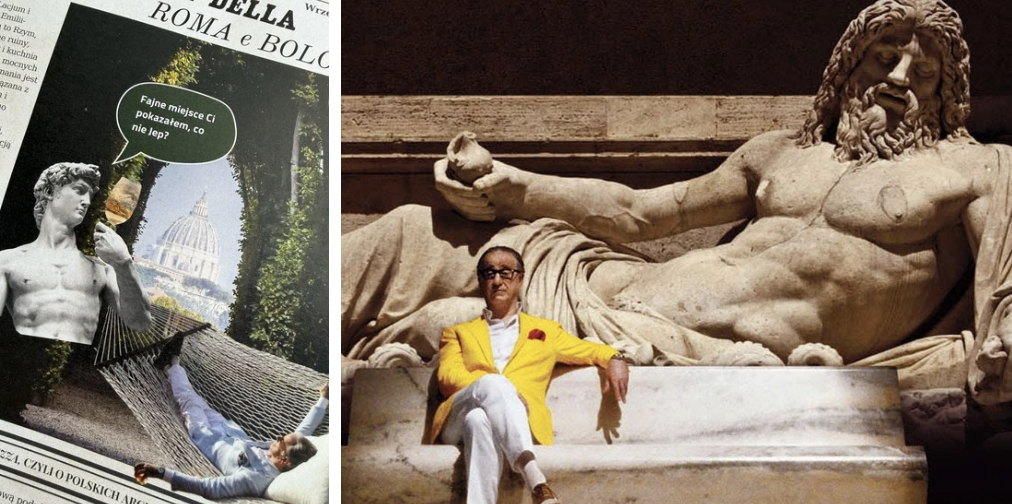
Piazza Navona, nocą
Piazzę Navona można opowiedzieć na tysiące sposobów. Wybraliśmy noc, kiedy plac pustoszeje, a fontanna Berniniego wychodzi z cienia. W filmie przechodzi tędy Jep z Oriettą, czyli nowo poznaną kochanką, która zapytana o to, czym się zajmuje, odpowiada bez zawahania: „Jestem bogata”.
„Piękny zawód”, kwituje Jep. W tej jednej wymianie zdań jest cały Rzym Sorrentina, czyli widowisko, które kusi zmysłami i rozkoszą, ale nie spełnia żadnej ze swoich obietnic.
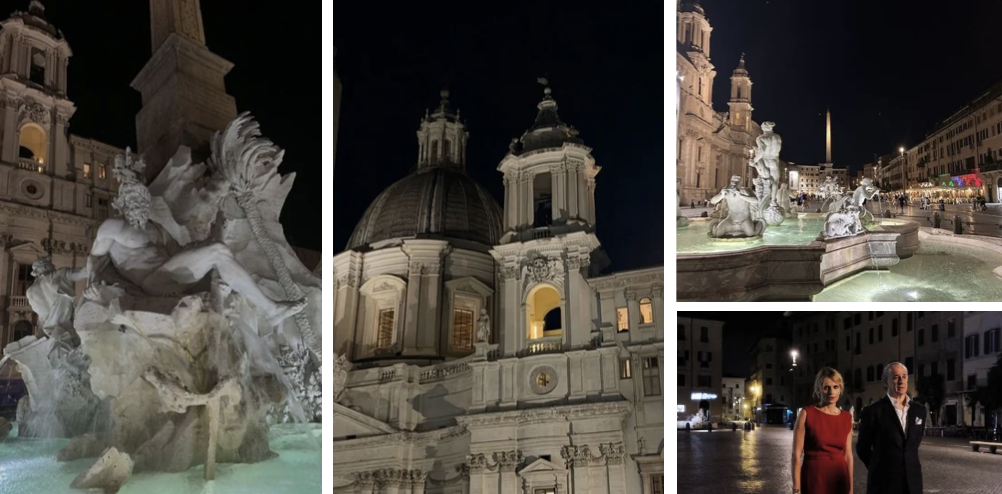
A Fellini, Sorrentino – czyli co ma wspólnego spojrzenie ryby z żyrafą?
Niektóre sceny „Wielkiego piękna” do złudzenia nawiązują do „Słodkiego życia”w reżyserii Felliniego, choć dzieli te filmy ponad pół wieku. W finale filmu Felliniego rybacy wyciągają na plażę martwego morskiego potwora, a jego nieruchome oko patrzy na bohaterów jednocześnie oceniająco i obojętnie. Sorrentino odpowiada na to po swojemu, nocną sceną w Termach Karakalli, gdzie pośród ruin stoi żyrafa. Iluzjonista sprawia, że znika, a gdy Jep prosi, żeby i jego sprawił, że zniknie, słyszy: „È solo un trucco”, to tylko sztuczka.
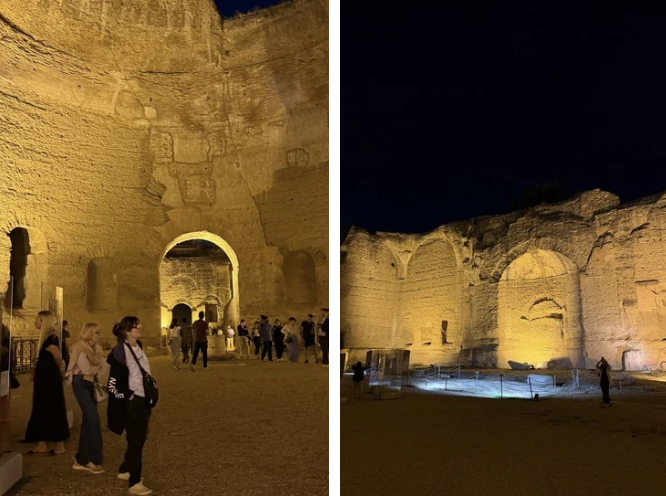
Do tych samych term, w których kręcona była scena z żyrałą poszliśmy nocą. Bilety na wieczorne otwarcia trudno zdobyć, bo w tym roku takich wieczorów było tylko sześć, od lipca do października, i zniknęły z kasy podobnie szybko jak żyrafa w tej scenie. Starożytne termy od ponad osiemnastu wieków przypominają o istnieniu innego świata. Co to było za widowisko! Wrześniowa cisza w całych termach, ciepłe kamienie oświetlone od dołu i myśli, które w ciągu dnia nie mają szans się przebić: o życiu, o przemijaniu i wdzięczności.
Wielkie piękno w pracowni u Andrea De Chirico
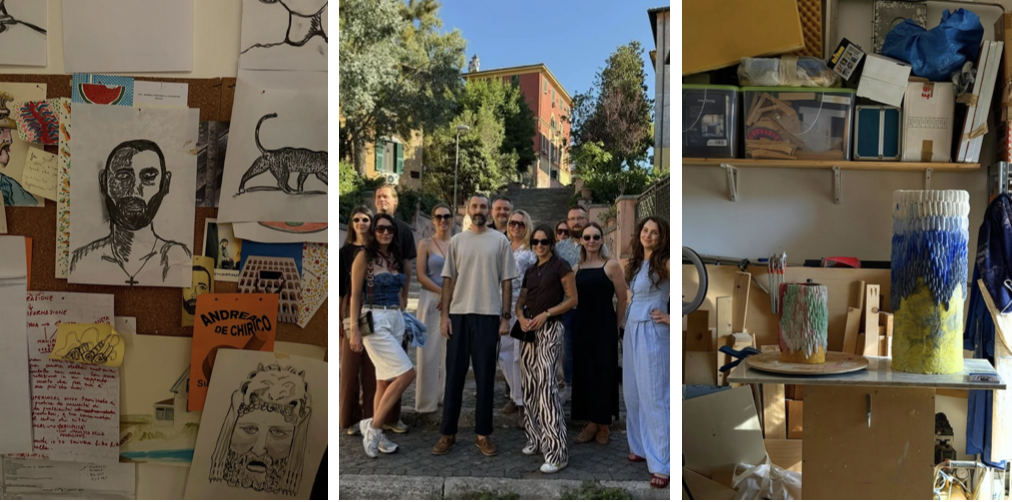
Zastanawialiśmy się, jaką wartość możemy dać tej grupie, której nie dostałaby nigdzie indziej, i odpowiedź znaleźliśmy w nazwisku de Chirico. Giorgio de Chirico, jeden z najważniejszych malarzy włoskiego XX wieku i twórca malarstwa metafizycznego, malował puste place, długie arkady i cienie, w których zwykłe przedmioty nagle stawały się zagadką. Jego młodszy brat Andrea, by nie żyć w cieniu sławnego Giorgia, przyjął pseudonim Alberto Savinio i został pisarzem, malarzem oraz kompozytorem. Wnuk Savinia, a zatem prawnuk brata Giorgia, nosi to samo imię co dziadek i rodowe nazwisko. Andrea de Chirico, rzymianin, absolwent Design Academy w Eindhoven, przyjął nas w swojej pracowni, która jest jednocześnie jego mieszkaniem.
Łóżko, lampy, stoliki, niemal wszystko, czego dotykaliśmy, pochodzi z jego projektu SUPERLOCAL. Andrea pracuje z lokalnymi rzemieślnikami i surowcami z najbliższej okolicy, pokazując, że przedmioty codziennego użytku można wytwarzać na miejscu, zamiast sprowadzać je zza oceanu czy z Chin. Nie ma w tym manifestu, raczej spokojna konsekwencja. Pomyślałam wtedy, ot, że autentyczności nie da się zagrać, a Andrea ją po prostu ma: prostotę, oddanie pracy i obojętność wobec trendów, za które ceni go włoska scena projektowa. To tam osobiście znalazłam wielkie piękno. Było dokładnie na przeciwnym biegunie niż pierwsze kadry filmu, w których Jep stoi pośrodku głośnej, kiczowatej imprezy urodzinowej z papierosem w dłoni i dystansem na twarzy.
Co zostaje po takim wyjeździe ArchiTour?
Było szukanie wielkiego piękna śladami filmowych scen, była nietuzinkowa dzielnica EUR i spotkanie z Andrea De Chirico. Był wieczór na Zatybrzu, był Rzym piękny i Rzym, który męczy, bo ta sama fontanna Berniniego potrafi jednocześnie zachwycać i stawiać opór.
Ciekawa jestem, co powiedziałby o tej podróży Sorrentino. Uśmiechnąłby się pod nosem czy machnął ręką, jak Jep w ostatnich słowach filmu: „Beh, è solo un trucco”?
Justyna, Slow Italia
[ENG]
Is It Just a Trick? Exploring Rome with Architects Through the Lens of The Great Beauty
An account of our ArchiTour in September 2026, designed and organised by Slow Italia.
Jep Gambardella, the main character in Paolo Sorrentino’s The Great Beauty, wakes up after his 65th birthday with one clear thought: he can no longer waste time on things he doesn’t feel like doing. Well, we understand him more than we would probably like to admit…
Trips built from ready-made packages and familiar routines, with the same places visited in the same order, are not really our thing. We are interested in journeys where every day has its own story, its own rhythm, and where a group of architects and designers comes home with more than just photographs. Our September ArchiTour in Rome, created for a group of architects from Piękne Kuchnie, was designed much like one of Sorrentino’s films: through images, sounds and words.
Rome is a challenging city, and we won’t pretend otherwise. It is chaotic and loud, and its beauty can sometimes feel overwhelming rather than simply inspiring. Sorrentino showed this side of Rome without holding back. His city tempts, promises and exhausts those who look at it only as tourists. And yet… no one seems able to escape its charm. For us, as people who design journeys, and for this group of architects, that was a special challenge. After all, everyone has already seen the Trevi Fountain and Piazza Navona.
Piazza Navona after dark
There are a thousand ways to tell the story of Piazza Navona. We chose the night, when the square becomes quieter and Bernini’s fountain slowly emerges from the shadows. In the film, Jep walks across the square with Orietta, a woman he has just met. When he asks her what she does, she answers without hesitation: “I’m rich.” “A beautiful profession,” Jep replies. This short exchange says a lot about Sorrentino’s Rome: a spectacle that seduces the senses and promises pleasure, but never quite delivers on those promises.
Fellini and Sorrentino: what does a fish’s eye have in common with a giraffe?
Some scenes in The Great Beauty seem to echo La Dolce Vita by Federico Fellini, even though more than half a century separates the two films. In Fellini’s final scene, fishermen pull a strange sea creature onto the beach. Its motionless eye looks at the characters with a mixture of judgement and indifference. Sorrentino offers his own answer. In a night-time scene at the Baths of Caracalla, a giraffe stands among the ancient ruins. A magician makes it disappear. When Jep asks him to make him disappear too, the answer is simple: “È solo un trucco”, it’s just a trick.
We visited the same baths, where the giraffe scene was filmed, at night. Tickets for the evening openings are hard to get. There were only six such evenings this year, between July and October, and they sold out almost as quickly as the giraffe disappeared in the film.
For more than eighteen centuries, these ancient baths have stood as a reminder of another world. And what a sight they were! The September night was quiet across the entire site. Warm stone walls glowed from below, and thoughts that rarely find space during the day began to surface: thoughts about life, passing time and gratitude.
The Great Beauty in Andrea De Chirico’s studio
We wondered what we could offer this group that they would not find anywhere else. The answer came through the name de Chirico. Giorgio de Chirico, one of the most important Italian painters of the 20th century and the founder of Metaphysical art, painted empty squares, long arcades and shadows that turned ordinary objects into mysteries.
His younger brother Andrea, wishing to step out of Giorgio’s shadow, took the name Alberto Savinio and became a writer, painter and composer. Savinio’s grandson, and therefore Giorgio’s great-nephew, carries the same first name as his grandfather and the family surname. Andrea de Chirico, a Roman and a graduate of Design Academy Eindhoven, welcomed us into his studio, which is also his home. The bed, lamps, tables, almost everything we came into contact with was part of his SUPERLOCAL project. Andrea works with local craftspeople and materials sourced from the surrounding area, showing that everyday objects can be made close to home instead of being shipped from across the ocean or from China. There is no grand manifesto behind it, just a quiet sense of purpose. I remember thinking that authenticity cannot be staged. Andrea simply has it: a straightforward approach, dedication to his work and little interest in chasing trends. These are some of the qualities that make him a respected name in the Italian design scene.
For me, that was where I found the Great Beauty. It was almost the opposite of the film’s opening scenes, where Jep stands in the middle of a loud, slightly kitsch birthday party, cigarette in hand, looking at it all with a certain distance.
What stays with us after an ArchiTour?
There was the search for Great Beauty through the places seen in the film, the unusual EUR district and our meeting with Andrea De Chirico. There was an evening in Trastevere, and there was Rome in all its contrasts: the Rome that takes your breath away, and the Rome that can leave you feeling tired. After all, the same fountain by Bernini can both amaze you and leave you wanting to look away.
I wonder what Sorrentino would say about our journey. Would he smile quietly to himself, or simply wave it away, like Jep in the film’s final words? “Beh, è solo un trucco.”
Justyna, Slow Italia