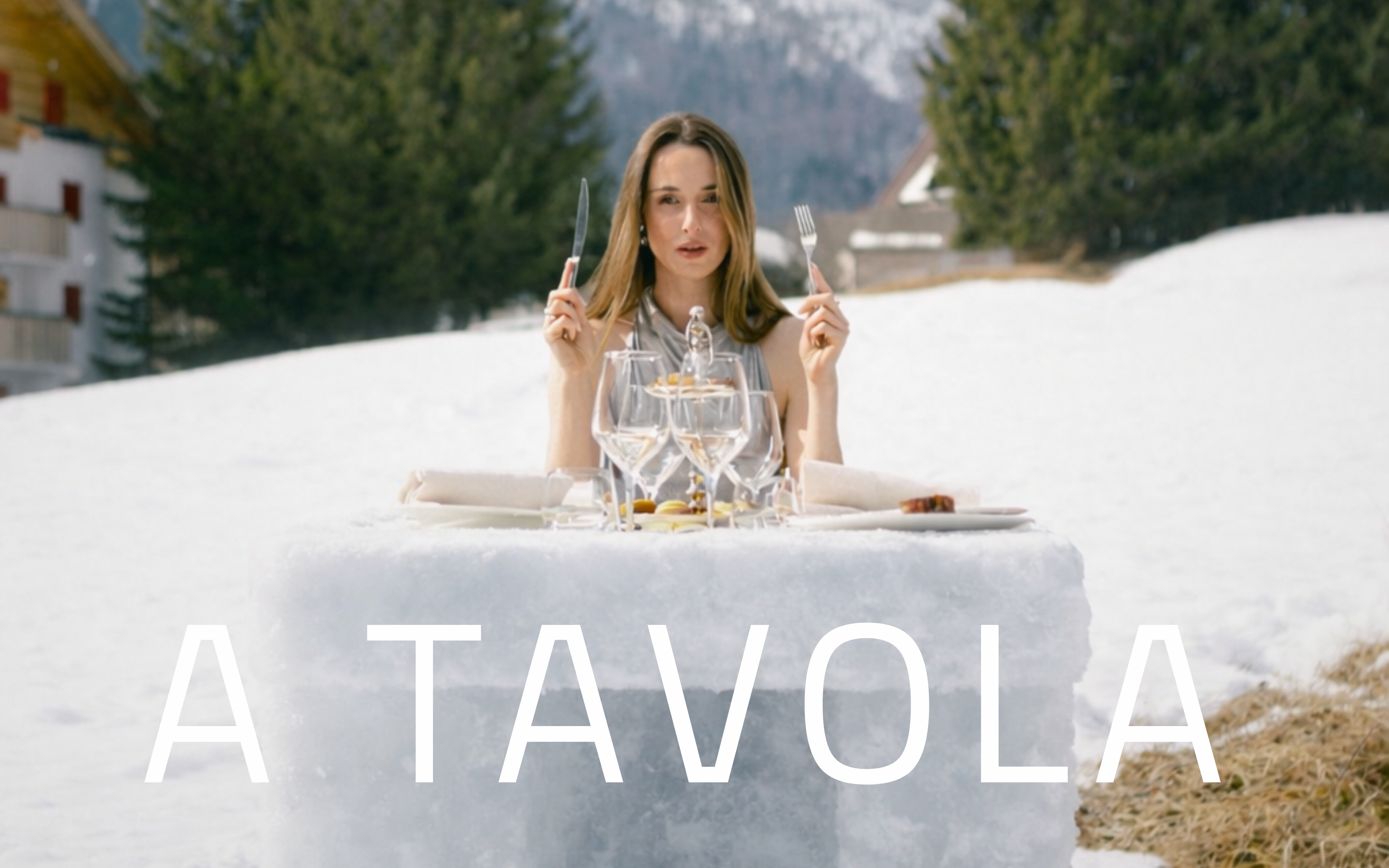
Wszystko, co piękne, potrzebuje czasu.
O włoskim winie, modzie, marmurze i tuszu z Toskanii na FuoriSalone
FuoriSalone rządzi się swoimi prawami. Przychodzisz z listą, a wychodzisz z zupełnie innymi obrazami w głowie. Tym razem moją listę wygrało wino – a konkretnie: Franciacorta, marmur z Carrary, marka modowa i biuro architektoniczne z Florencji w jednym projekcie. Do tego toskańska artystka, która maluje winem. I pomimo różnych, czasem skrajnych i bardziej negatywnych opinii na temat tej edycji Salone del Mobile i FuoriSalone 2026, znalazłam tutaj coś swojego.
To teraz od początku, bo wszystko ułożyło się dla mnie w jeden włoski puzzel.
Rok 1961. Ten sam rok, trzy przełomy
To rok pierwszej edycji Salone del Mobile w Mediolanie (targów meblowych) które zrewolucjonizowały pojęcie włoskiego wzornictwa i po raz pierwszy pokazały światu to, co dziś znamy jako Made in Italy. Dodatkowo, moda włoska ma swój wielki początek: pierwsze pokazy mody (a wraz z nimi skandale, ale o skandalach innym razem), włoskie prêt-à-porter zajmuje miejsce francuskiego haute couture.
W tym samym roku Guido Berlucchi i Franco Ziliani zamknęli pierwsze trzy tysiące butelek Pinot di Franciacorta, wina musującego robionego metodą klasyczną, tą samą żmudną i cierpliwą, co Szampan. Tak narodziła się Franciacorta.
Trzy przełomy, ten sam rok. Przesądni Neapolitańczycy powiedzieliby, że to nie przypadek. I słusznie.
Slowear, Luce di Carrara i Franciacorta, czyli co łączy wino z marmurem i marką modową?
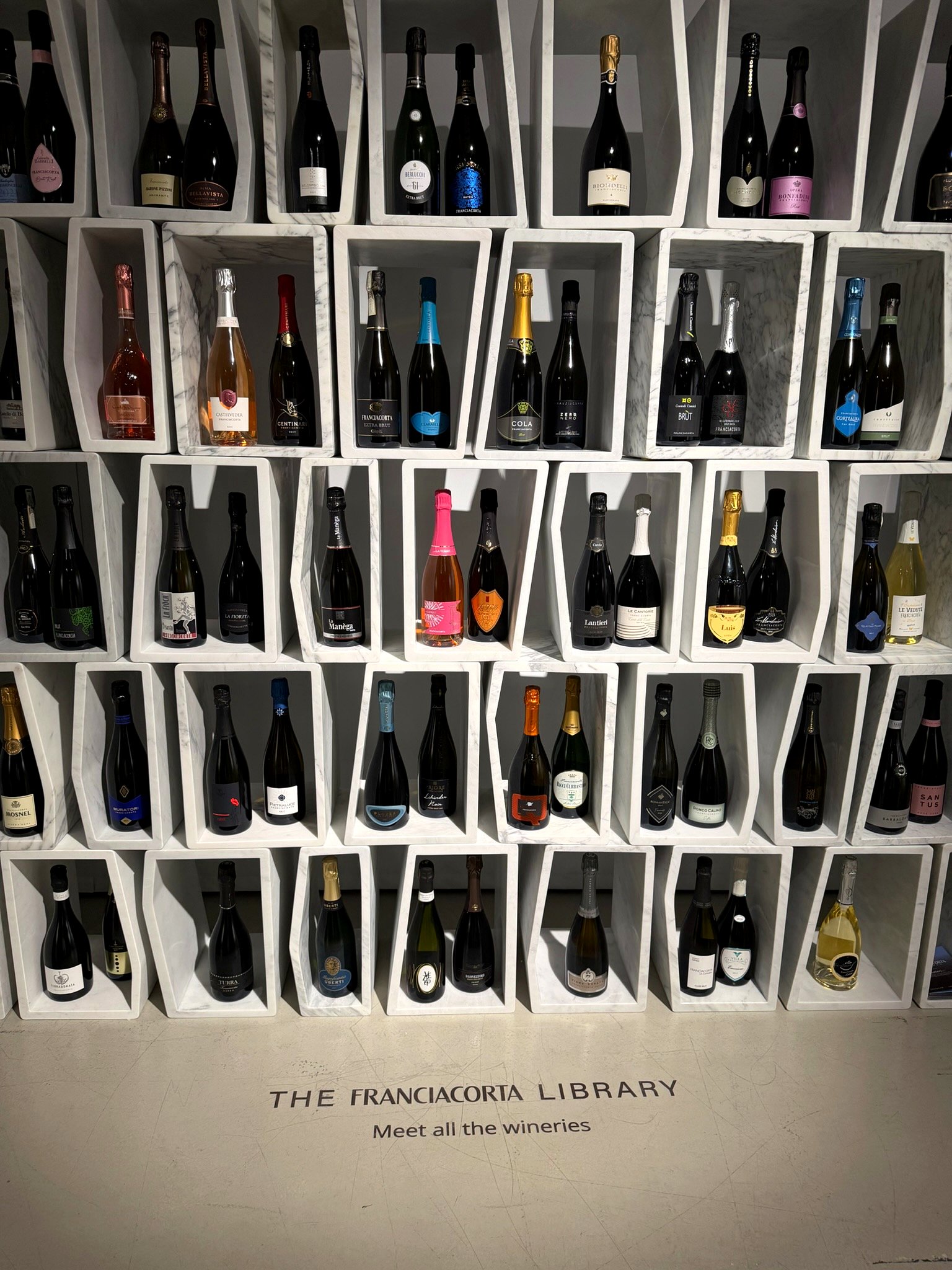
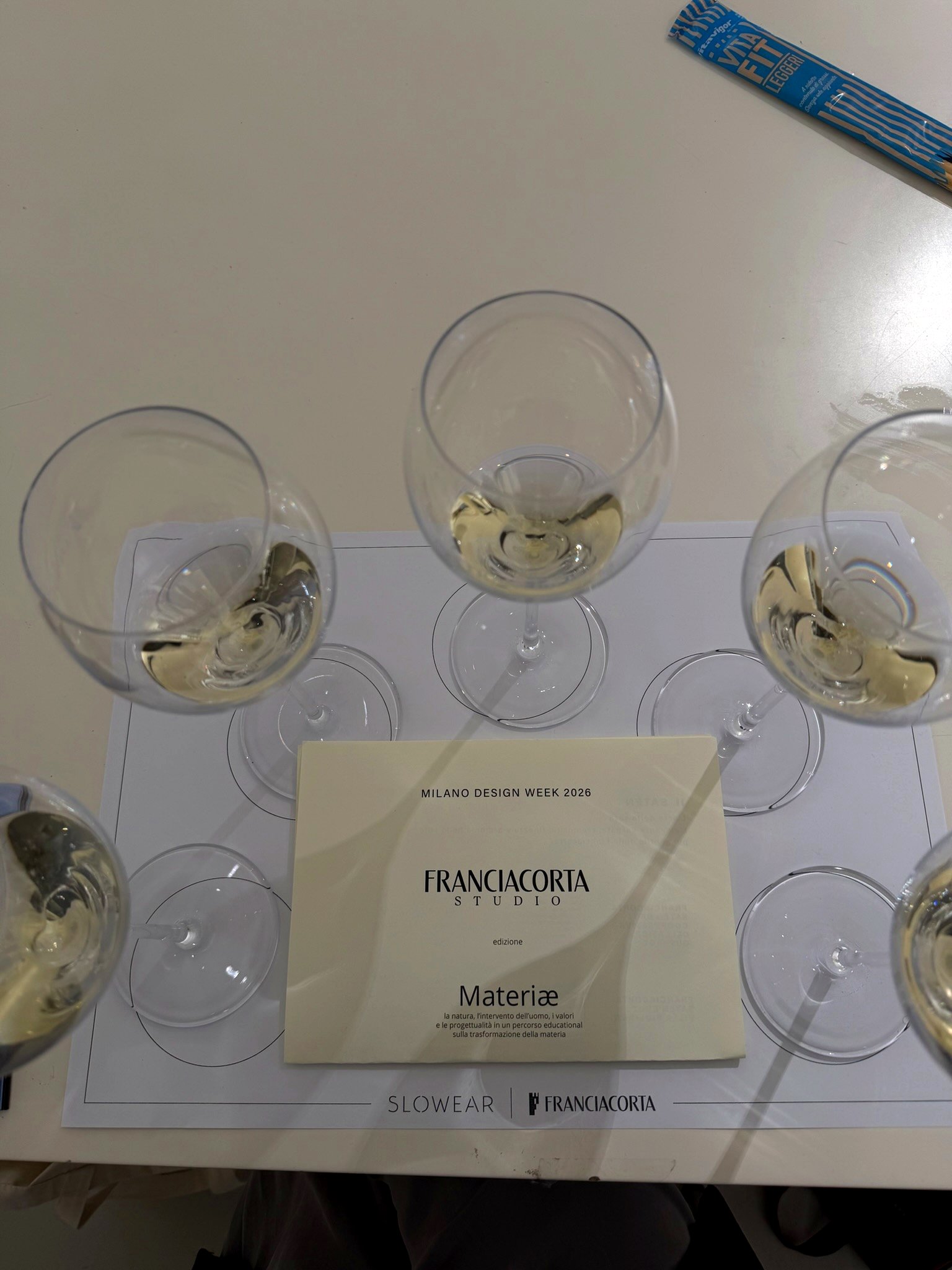
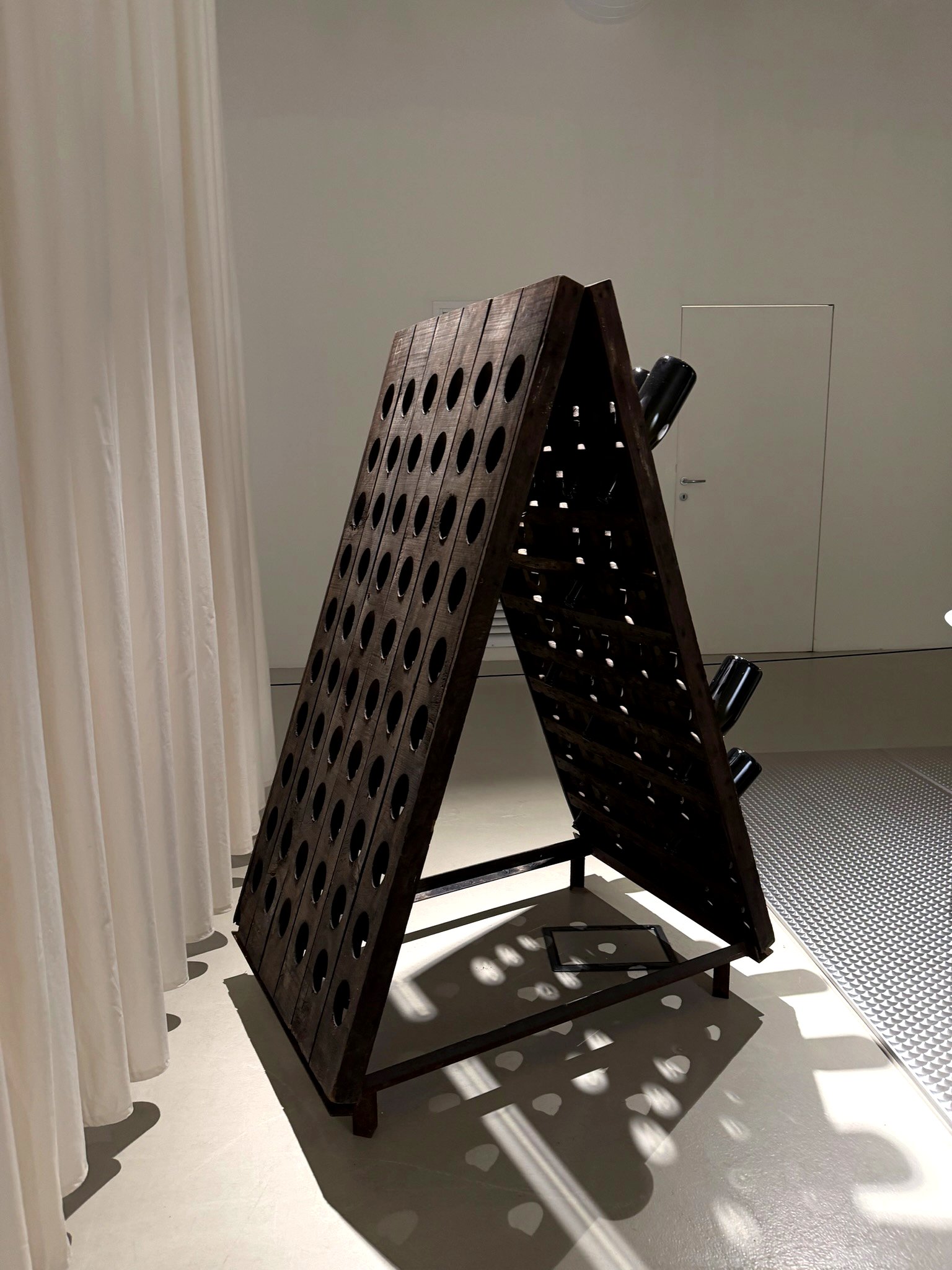
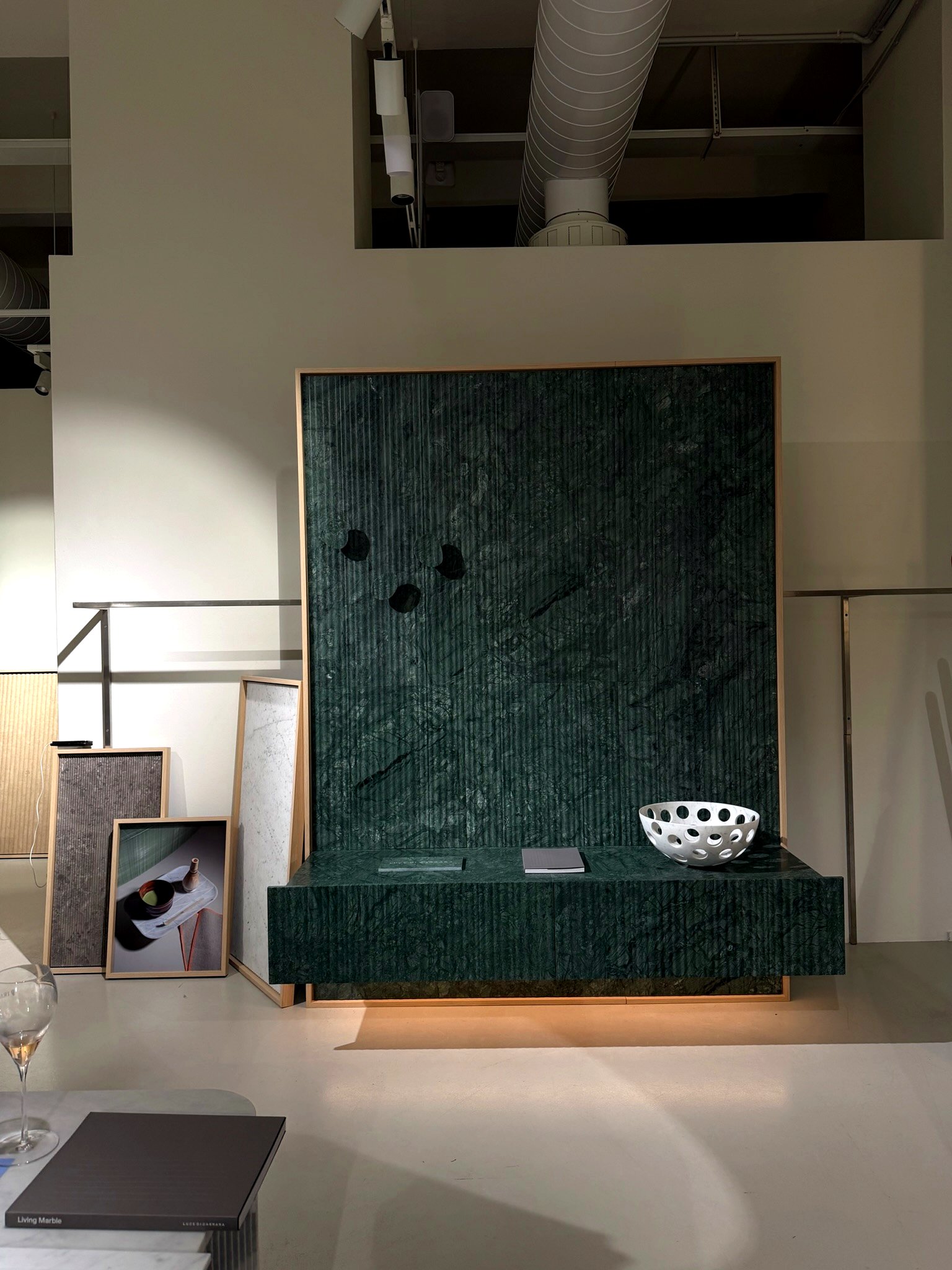
Instalacja Franciacorta Studio mieściła się w showroomie włoskiej marki Slowear na Corso Sempione. Przestrzeń, podzielona na kilka stref, poświęcona była żywiołom tworzącym terroir Franciacorty: ziemi, wodzie, wiatrowi, człowiekowi, czasowi. Do tego elementy z marmuru z Carrary zaprojektowane przez florenckie biuro Pierattelli Architetture (notabene, miałam okazję poznać projekty architektów Pierattelli i ich wartości (nie wyobrażam sobie innego biura w tej wystawie).
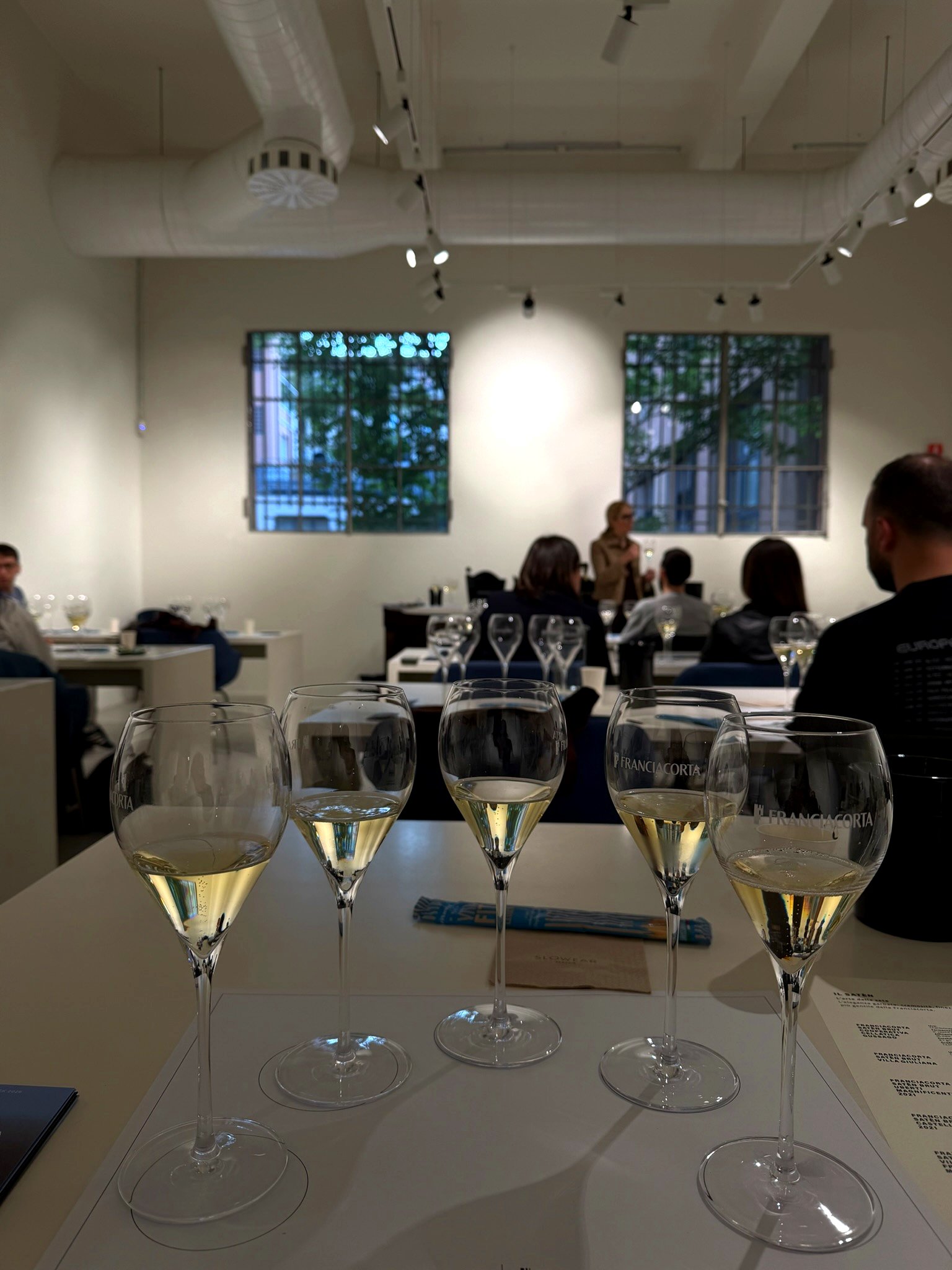
Wieczorne degustacje prowadzone przez Sarę Missaglię były dla mnie czymś więcej niż prezentacją etykiet. Opowieść o tym, że słoność, którą czujesz w kieliszku Franciacorty, jest śladem po morzu, które tysiące lat temu pokrywało te tereny. No właśnie – historia w kieliszku.
Hasło tegorocznego FuoriSalone brzmiało Essere Progetto, czyli „być projektem”. Ważniejszy jest proces niż efekt finalny. I w tym sensie wino, marmur i moda mówią tym samym językiem: wszystkie wymagają czasu, którego współczesny świat nie lubi dawać.
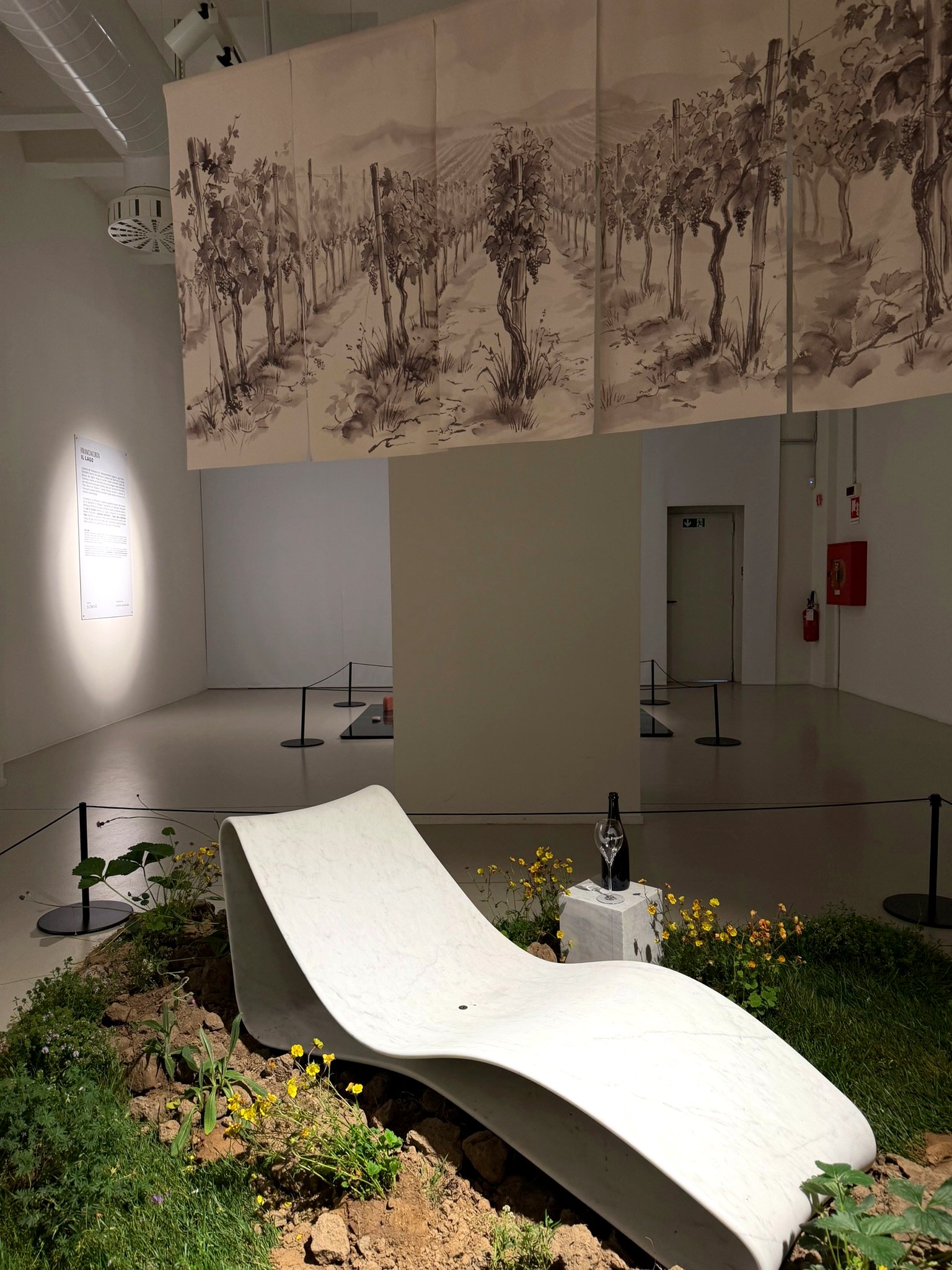
Strefa Il Lago: winnice narysowane tuszem, marmur, ziemia. Terroir w jednej przestrzeni.
Starszy pan, elegancka pani i obraz namalowany winem
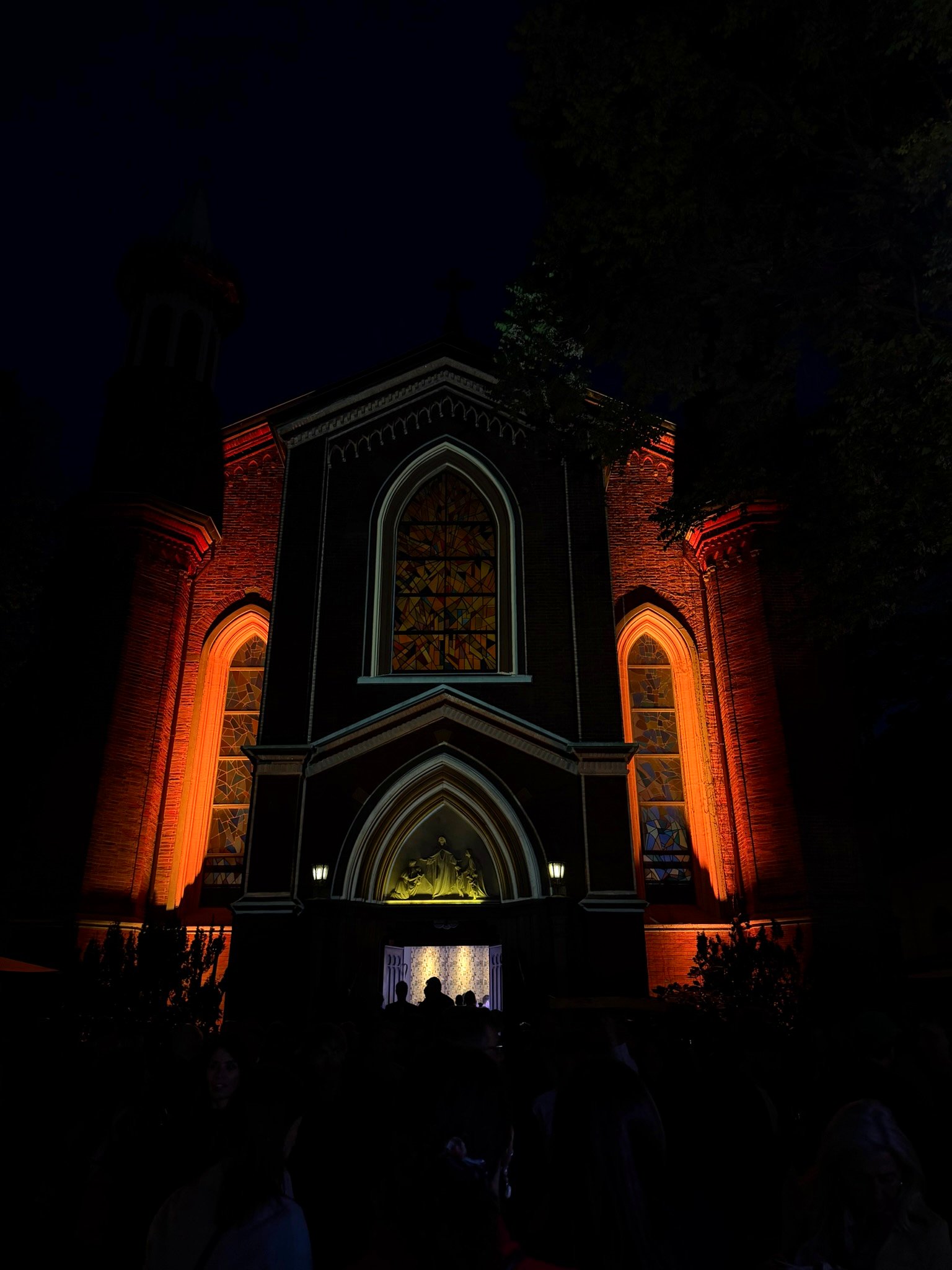
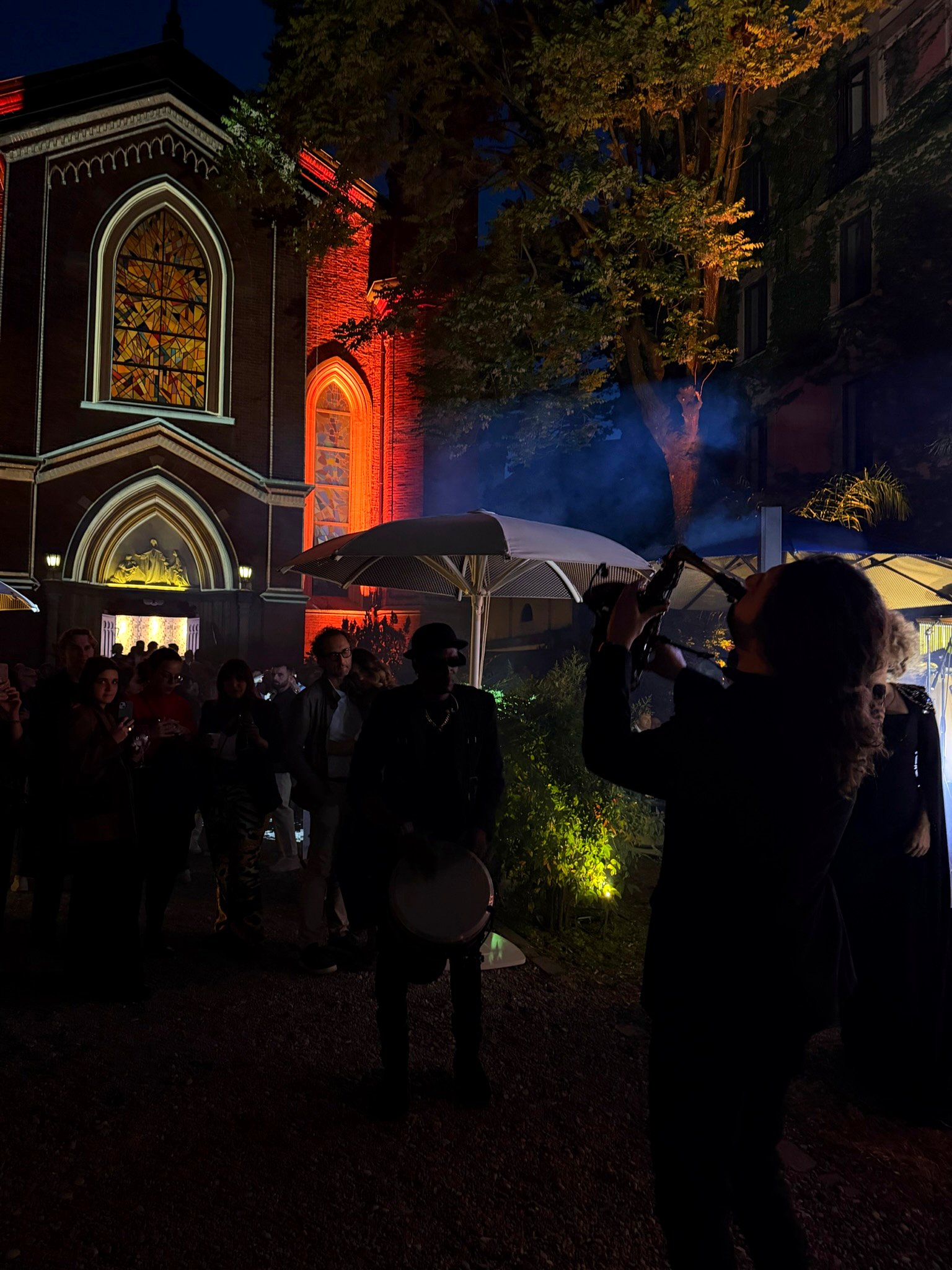
Do MONDI/26 trafiłam trochę przypadkiem, a trochę nie. Majstersztyk. Instalacja w kościele w samym sercu Brery, tkaniny, światło, architektura. Stałam przed dużym płótnem z koniem. Obok na stoliku stała butelka z żółtą etykietą Ruffino.
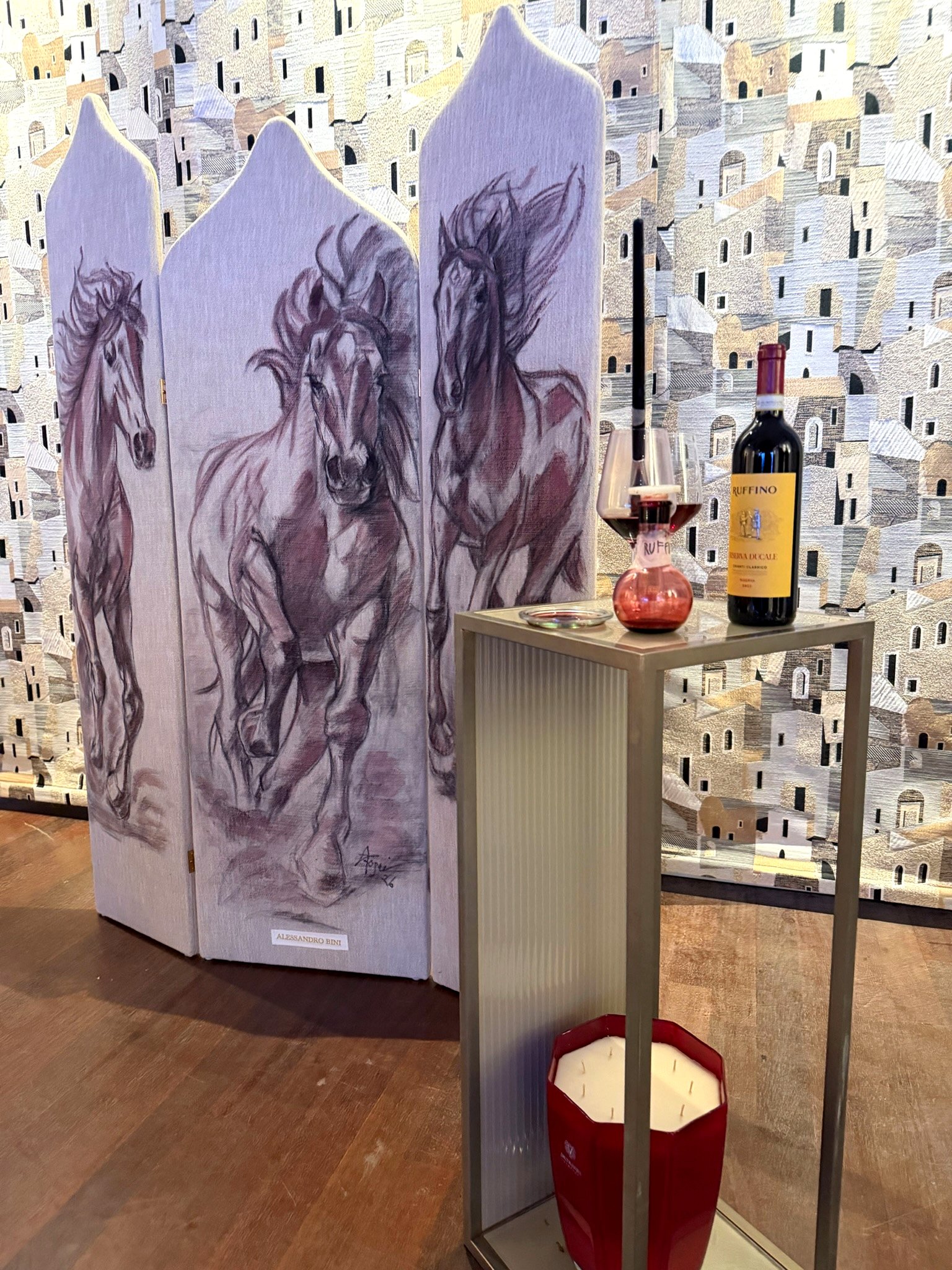
Podszedł starszy pan i zagadał spokojnie: „Czy wiesz, że to, co widzisz, jest namalowane winem?”. Wyraźnie czekał na moją minę.
Chwilę potem okazało się, że jest mężem Elisabetty Rogai – florenckiej artystki, która od lat maluje wyłącznie winem zamiast farb. Technika, którą sama opracowała i opatentowała. Obrazy starzeją się na płótnie dokładnie tak jak wino w butelce – zmieniają się wraz z czasem. Elisabetta tworzyła na żywo, wchodząc w relację z przestrzenią i widzem. Wino, coś, co zwykle towarzyszy rozmowie między ludźmi, stawało się tu narzędziem twórczym. Granica między sztuką a codziennością zacierała się całkowicie.
Człowiek, materia, czas
Tyle zależności i interdyscyplinarności, które układają się w jeden spójny obraz, tak, jak ten od Elisabetty. W obu miejscach wino przestało być dodatkiem. Stało się głównym bohaterem. I oba projekty mówiły o tym samym: że to, co naprawdę dobre, potrzebuje czasu. Marmur, wino, tkanina, obraz – każde z nich wymaga procesu. I człowieka, który potrafi poczekać.
I właśnie w tym tkwi coś, co rozpoznaję w tym, co robimy w Slow Italia na co dzień. Nasze podróże też są poniekąd procesem. Nie chodzi o check-listę atrakcji, ale o doświadczenia – czas na relacje, degustację, rozmowę, na zrozumienie, skąd pochodzi i od kogo to, co mamy w kieliszku lub na talerzu. A Italia, jak widać, jest do tego naturalnym tłem.
Winna ironia
Jest pewna ironia w tym, że wino, które istnieje od czterech tysięcy lat (a może nawet dłużej!), które było zawsze przy ludziach, przy stole, przy rytuałach, weszło do jednego z największych wydarzeń świata designu nie jako dodatek, nie jako sponsor, ale jako pełnoprawny twórca. Że ktoś w końcu wpadł na to, że między marmurową posadzką a Franciacortą w kieliszku i zrównoważoną marką modową jest dokładnie ta sama historia: cierpliwość, ziemia i ręce.
A najlepszy obraz tej nocy? Namalowany winem – i tak jak wino, zmienia się z czasem.
Justyna, Slow Italia
PS. Artykuł napisany z czasem… bez AI.
[ENG]
About Italian wine, fashion, marble and Tuscan ink at FuoriSalone
FuoriSalone plays by its own rules. You arrive with a list, and leave with entirely different images in your head. This time, wine won out over my list — specifically: Franciacorta, Carrara marble, a Florentine fashion brand and architecture studio rolled into one project. And a Tuscan artist who paints with wine. And despite the mixed — sometimes sharply negative — opinions about this edition of Salone del Mobile and FuoriSalone 2026, I found something here that was mine.
So let’s start from the beginning, because everything fell into place for me like one Italian puzzle.
1961. The same year, three breakthroughs
The year of the first edition of Salone del Mobile in Milan — the furniture fair that revolutionised the concept of Italian design and first showed the world what we now know as Made in Italy. Italian fashion also had its grand beginning: the first fashion shows (and with them, scandals — but that’s a story for another time), Italian prêt-à-porter stepping into the space left by French haute couture.
That same year, Guido Berlucchi and Franco Ziliani sealed the first three thousand bottles of Pinot di Franciacorta — a sparkling wine made by the classic method, the same painstaking, patient process as Champagne. And so Franciacorta was born.
Three breakthroughs. The same year. Superstitious Neapolitans would say it’s no coincidence. And they’d be right.
Slowear, Luce di Carrara and Franciacorta – what connects wine with marble and a fashion brand?
The Franciacorta Studio installation was housed in the showroom of Italian brand Slowear on Corso Sempione. The space, divided into several zones, was dedicated to the elements that form Franciacorta’s terroir: earth, water, wind, human presence, time. Alongside these, marble elements from Carrara designed by Florentine studio Pierattelli Architetture — architects whose work and values I had the chance to encounter up close (and I can’t imagine any other studio fitting this exhibition better).
The evening tastings led by Sara Missaglia were something more than a presentation of labels. The story of how the saltiness you sense in a glass of Franciacorta is a trace left by the sea that covered these lands thousands of years ago. History in a glass.
This year’s FuoriSalone theme was Essere Progetto — „to be a project.” The process matters more than the final result. And in that sense, wine, marble and fashion speak the same language: all three demand time, and time is something the modern world is reluctant to give.
An elderly gentleman, an elegant lady, and a painting made with wine
I ended up at MONDI/26 half by chance, half not. A masterstroke. An installation in a church in the heart of Brera — fabric, light, architecture. I stood before a large canvas with a horse. On a small table beside it sat a bottle with a yellow Ruffino label. An elderly gentleman approached and said, calmly: „Do you know that what you’re looking at was painted with wine?” He was clearly waiting to see my face.
A moment later I discovered he was the husband of Elisabetta Rogai — a Florentine artist who has spent years painting exclusively with wine instead of paint. A technique she developed and patented herself. The paintings age on the canvas exactly as wine ages in a bottle — they change over time. Elisabetta was creating live, entering into a relationship with the space and the viewer. Wine — something that usually accompanies conversation between people — became here a creative tool. The boundary between art and the everyday dissolved completely.
Human, matter, time
So many connections, so much interdisciplinarity, all forming one coherent image — much like Elisabetta’s own paintings. In both places, wine ceased to be a supporting act. It became the main character. And both projects said the same thing: that what is truly good requires time. Marble, wine, fabric, a painting — each demands a process. And a person willing to wait.
And that is precisely something I recognise in what we do at Slow Italia every day. Our journeys are, in a sense, also a process. It’s not about a checklist of attractions, but about experiences — time for relationships, for tasting, for conversation, for understanding where what we have in our glass or on our plate comes from, and who made it. And Italy, as it turns out, is a natural backdrop for all of this.
A vinous irony
There is a certain irony in the fact that wine — which has existed for four thousand years (perhaps even longer) — which has always been present with people, at the table, in rituals — entered one of the world’s greatest design events not as a side note, not as a sponsor, but as a fully-fledged creator. That someone finally understood that between a marble floor and a glass of Franciacorta and a sustainably-minded fashion brand, there is exactly the same story: patience, earth, and hands.
And the finest image of that evening? Painted with wine — and like wine, it changes with time.
Justyna, Slow Italia
PS. This article was written with time… and without AI.